
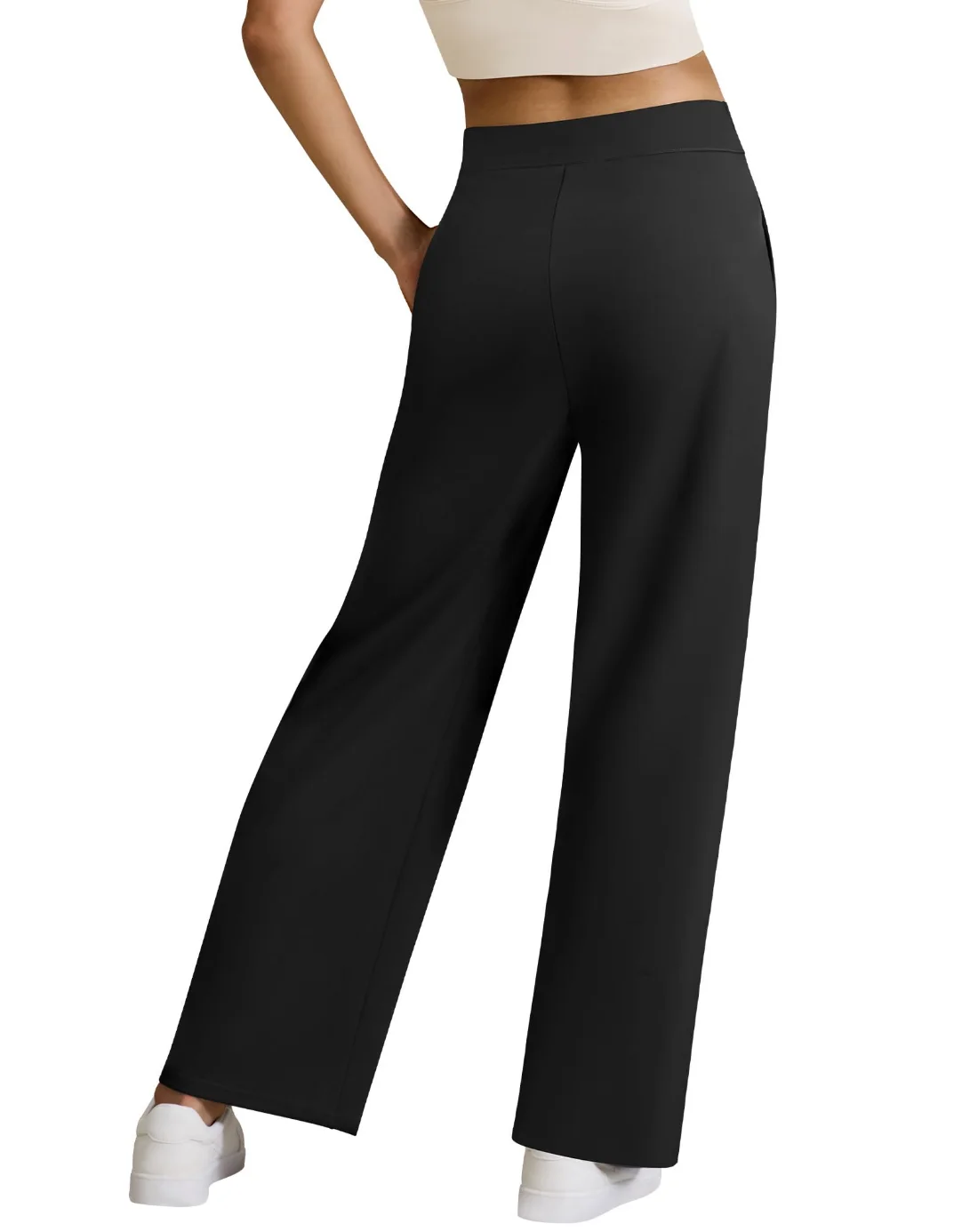
Why your waist decides the size
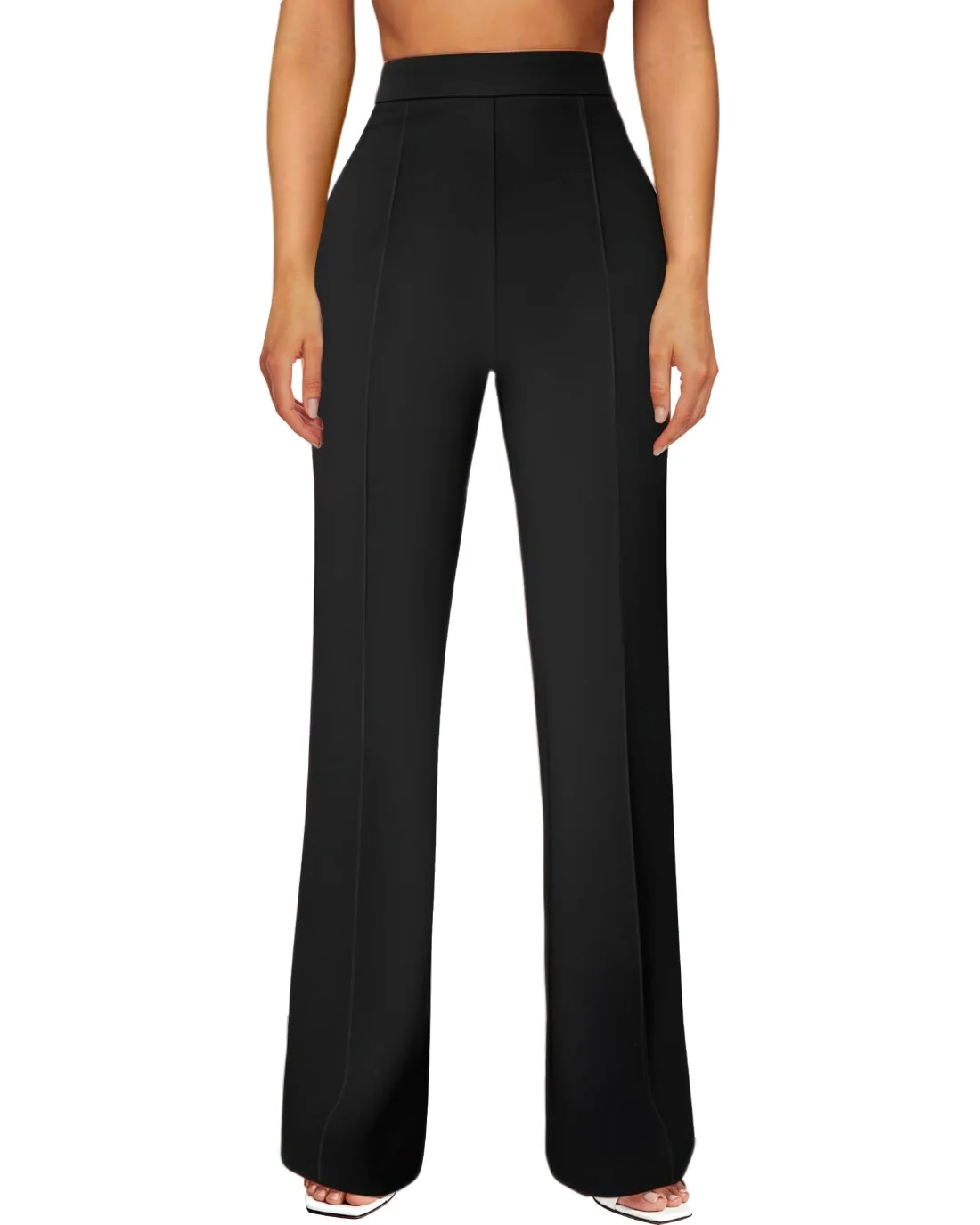
JEKAOYI Front Seam Straight Leg Dress Pant
Straight leg dress pants · 80% polyester, 20% spandex · 11 colors
From $14.99A trouser with a zip gives you room to negotiate. You can let the waist out, move a hook, wear a belt. A pull-on dress pant gives you none of that. The waistband is an elastic ring, and it either sits where you put it or it does not. That is why your waist, not your usual number and not your hips, is the measurement to start with.
Stand up straight and relax your stomach. Lean to one side and notice where your body bends: that crease is your natural waist. Wrap a soft tape around it, keep one finger under the tape and read the number without pulling. Write it down before you look at any size list, because a number you remember is usually a number you wish for.
Most JEKAOYI dress pants are a polyester knit with 10 to 20 percent spandex. The knit gives at the hip and the thigh. The elastic waist gives too, but only in one direction: it can stretch to fit a larger waist, and it cannot shrink to hold a smaller one. A waistband that already feels loose at eight in the morning will be lower on your hips by lunch.
Hips, thighs and the size above your waist
Now measure the fullest point of your hips with your feet together, tape level all the way around. If your hip number falls in the same letter size as your waist, you are done. If it sits a size above, the fabric decides what happens next.
In a polyester and spandex knit, stay with your waist size. The stretch covers the difference at the hip, and the waist stays put. If the fabric pulls across the front of your thighs when you sit, then move up, and use a thin belt through the loops on styles that have them.
Linen blends behave differently. Our linen pants carry 17 to 20 percent linen with cotton, rayon or nylon and only a little spandex, so the hip gives far less. Here, take the size that fits your hips. Most of them close with a drawstring, which pulls the larger waist in without a gap at the back.
The inseam, and the shoes you will actually wear
Find a pair of pants whose length you like. Lay them flat, fold one leg back, and measure along the inside seam from the crotch to the hem. That is your inseam. When a style lists its own, such as the 28 to 29.5 inches on our pleated palazzo, compare the two numbers directly.
Then think about your feet. A straight leg looks longest when the hem just meets the top of your shoe. A wide leg and a bootcut should nearly reach the floor in the heel you plan to wear with them, so a pair that is perfect over a two inch block heel will drag over a ballet flat. Decide the shoes first, then the length.
The sit test, before and after you order
Sit down in a pair of pants you already own, in the chair you use at work. Lean toward the desk, cross your legs, reach for something on the floor. Notice what the waistband does.
- It rolls over at the top. The band is too loose or too soft. Choose your true waist size and a style with a wider, firmer waistband.
- It digs in and leaves a line. The band is too tight. Move up one size, or look at the drawstring styles, which you can loosen after lunch.
- It slides down when you stand. The size is too large at the waist, even if the hips feel right.
Do the same test when your new pair arrives, before you remove the tags. Five minutes in a chair tells you more than five minutes in front of a mirror.
Reading the fiber line for stretch
The fiber line on the label is the other half of the fit. The Federal Trade Commission requires fibers to be listed by generic name and by percentage of weight, largest first. Fibers under 5 percent are normally lumped together as other fiber, but a fiber with a definite function, such as spandex for elasticity, may be named even in a small amount. Rayon may also appear as viscose.
So "80% polyester, 20% spandex" tells you the pant is mostly polyester and has plenty of stretch. A linen blend that names 5 percent spandex after three other fibers stretches far less. Match the size advice to the line you read, not to how soft the fabric looks in a photo.
Details that change how the pants fit and read
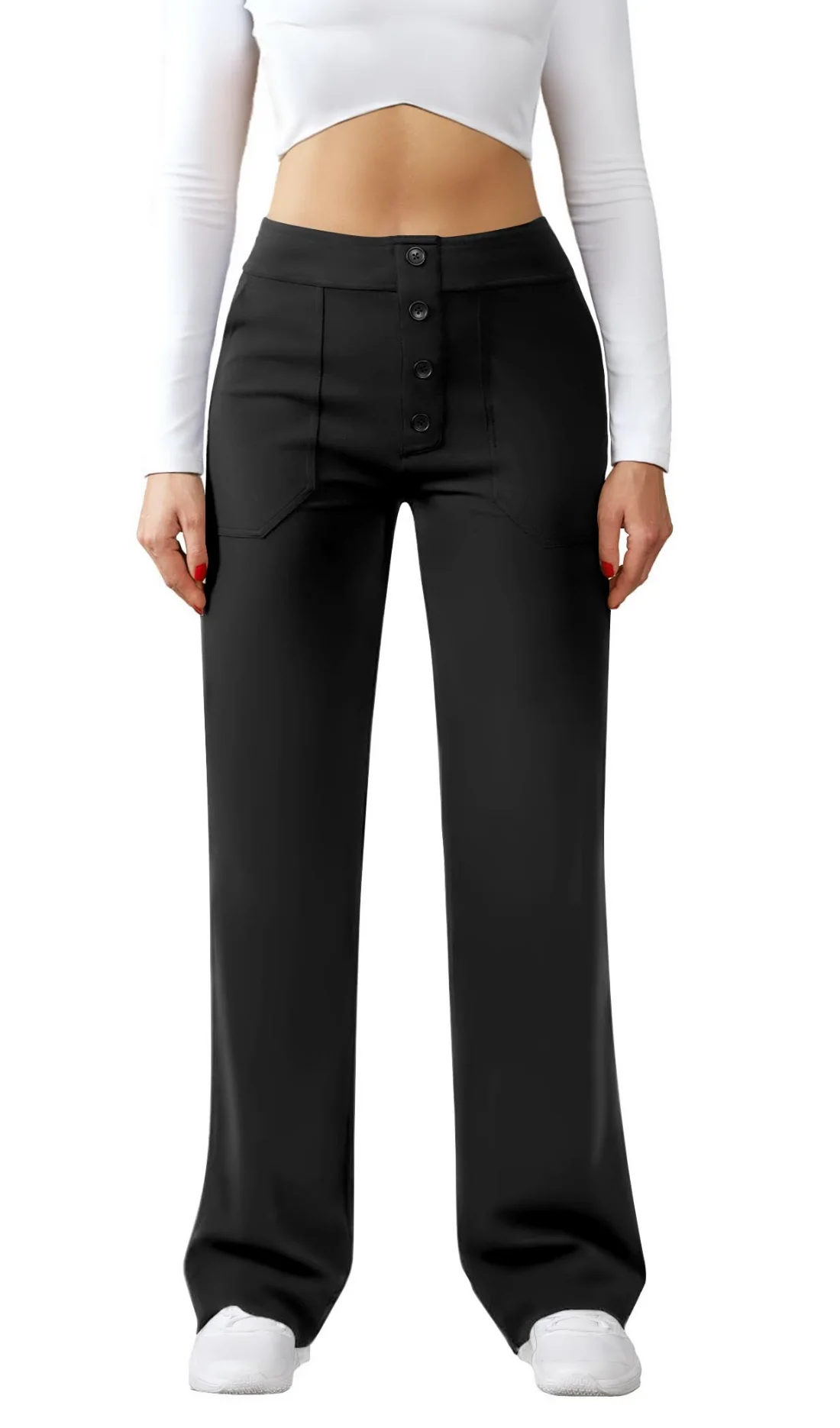
JEKAOYI Button-Front Straight Leg Dress Pant
Straight leg dress pants · 80% polyester, 20% spandex · 9 colors
From $17.99Some details are there for the look. A faux fly and a row of decorative buttons make a pull-on pant read as a trouser, and they do not open, so they change nothing about the fit.
Other details do change it. Front pleats fold extra room into the top of the thigh, which helps if you sit for long stretches. A pressed center crease runs down each leg of a wide leg pant and keeps the fullness looking deliberate. Pockets matter most of all: a phone in a side pocket pulls the waistband down on that side, so if you carry one every day, choose zip or slant pockets and your true waist size.
Unsure about a size, an inseam or a wash? Write to inseam@jekaoyi.net and the people at JEKAOYI will answer.